Key-person risk
What happens when the person who knows the systems leaves
Most of what we do should be invisible to you. The measure of it is how rarely infrastructure reaches your desk: no emergency escalations, no surprise invoices, no single engineer whose departure becomes a company problem. When something does need a decision from you, it arrives in plain language with the cost and the risk already worked out.
 Quiet operations
What happens when the person who knows the systems leaves
What the estate costs to run, and what is driving it
What an outage would cost, and what prevents one
The infrastructure questions auditors, insurers, and buyers ask
What still runs on a platform no vendor supports, and what replacing it involves
What needs replacing when, and what that is likely to cost
Rarely a technical decision at first. Usually risk, cost, or someone leaving.

SSH policy inconsistencies, outdated packages, audit findings on privileged access, and configuration drift across production fleets.
Learn more >
Reduce downtime risk on systems where every minute of outage carries compliance exposure, public impact, or constituent trust.
Learn more >
When your team can run a Linux box but can't run twelve, or thirty, or three hundred, senior Linux bench capacity without a full-time hire.
Learn more >
Infrastructure aligned with regulated audits, agency security and privacy programs, commercial frameworks where public services touch the private sector, and internal controls that need proof, not narrative alone.
Learn more >
Modernizing aging Linux systems without disrupting transaction-processing windows or core banking schedules.
Learn more >
Tested failover, backup integrity, and recovery objectives that hold up under examiner scrutiny.
Learn more >
You should be able to run the company and not worry about whether Linux will hold.
Mostly measured by what stops reaching you.
Systems documented and run by a team rather than an individual, so a resignation does not take operational knowledge with it.
Fixed-scope projects or a flat retainer, so infrastructure work stops arriving as unplanned emergencies.
A named team that owns the Linux estate end to end, so problems do not sit unclaimed between vendors.
Plain summaries of what runs, what it costs, and where the risk sits, without needing someone to translate them first.
Problems handled at the engineering level, so infrastructure stops arriving on your calendar as an emergency.
Risks, costs, and changes raised while they are still routine, rather than as decisions you have to make under pressure.
The applications the business depends on stay available, because the infrastructure under them is monitored, patched, backed up and tested.
Migrations and upgrades planned around the business calendar, so moving off an unsupported platform is a project rather than an incident.
Real engagements, real outcomes.
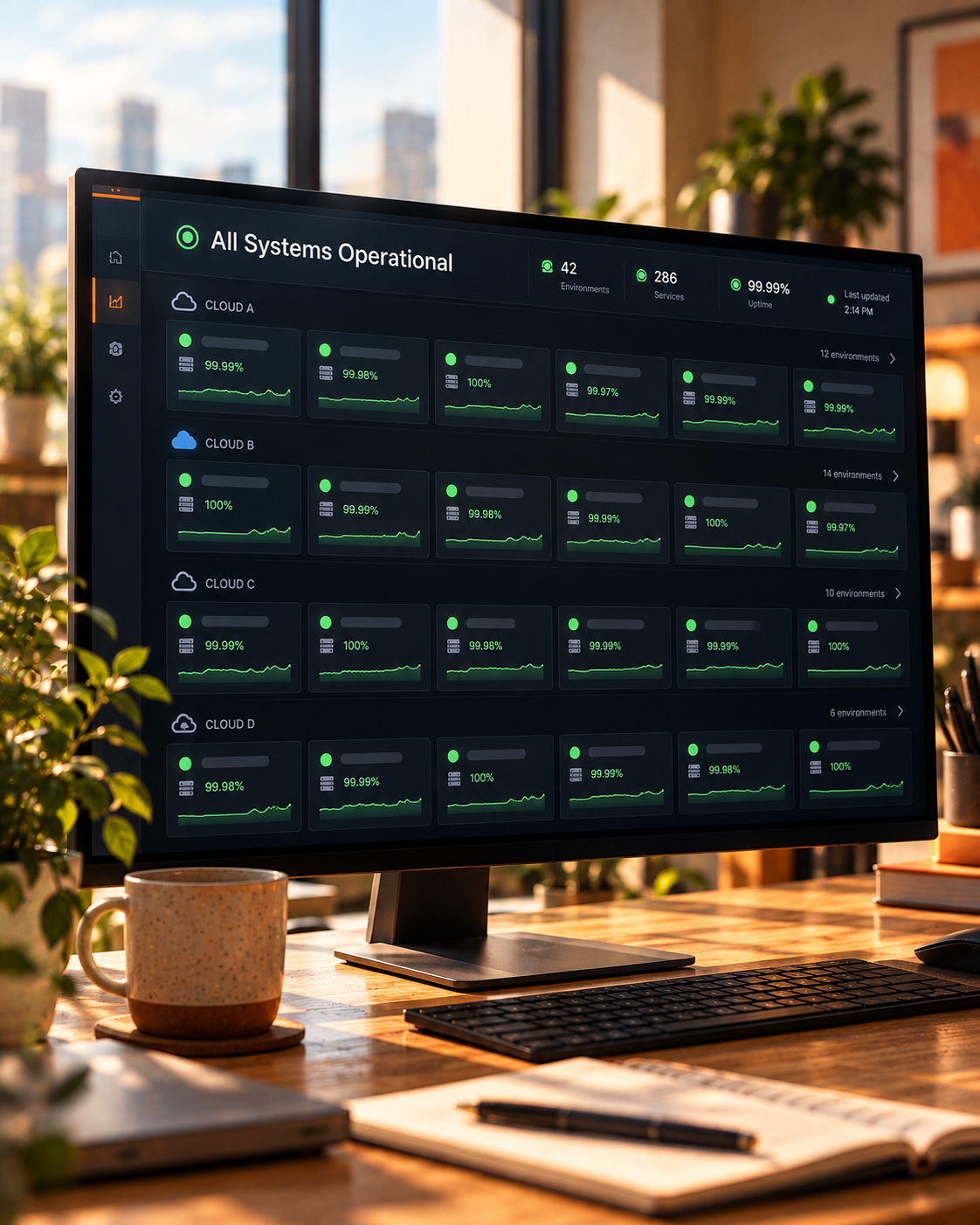
How Elite Digital handed off their multi-cloud server operations to a team their clients would never see, and never need to.

How the American Dairy Goat Association migrated off AWS, upgraded Oracle, and got back to their mission, on a non-profit budget.

How Efficient Computer Company turned engineering infrastructure from a daily distraction into the platform their team actually builds on.

How Unite Communications got the specialized infrastructure expertise of a full IT team, for less than the cost of a single in-house hire.

How Follosoft stopped firefighting Linux infrastructure and got back to building their field-operations platform.

How Crafty Penguins delivered a fully production-ready, high-availability, multi-data-center platform for a US commercial bank, from zero footprint to documented handover.

How Crafty Penguins brought a US commercial bank's enterprise Linux fleet to a documented, high-90s compliance score, server by server, control by control.
What this work looks like in practice.

A short call with an engineer rather than a sales pitch. We will tell you what we would look at first, and whether it is worth doing at all.
Conversation first, scope second. No pressure.