Cluster operations
Kubernetes and OpenShift upgrades, node work, and the failures in between
You want to ship, not babysit clusters. We take the layer underneath: Kubernetes and OpenShift upgrades and node operations, the Linux hosts, the storage and networking that fail in interesting ways, and the Prometheus, Grafana and Loki stack that is supposed to tell you when something is wrong. Your pipelines and your repositories stay yours.

Kubernetes and OpenShift upgrades, node work, and the failures in between
Provisioning and configuration in code rather than by hand
Metrics, logs, dashboards and alerts worth being woken by
The operational work that keeps you out of the codebase
Workloads spread across public cloud, private cloud and your own hardware
The infrastructure work that competes with shipping.

Reduce downtime risk on systems where every minute of outage carries compliance exposure, public impact, or constituent trust.
Learn more >
Cutovers, hyperscaler moves, and tenant-safe maintenance windows that don't become surprise downtime for paying customers.
Learn more >
Node lifecycle, upgrades, networking, and guardrails so clusters keep pace with product releases, not become the bottleneck.
Learn more >
Visibility across heterogeneous Linux environments so incidents surface before outages show up for users, citizens, or downstream partners.
Learn more >
Design, build, and deliver a production platform ready for your team to operate, with the documentation, security baselines, and training to run it confidently.
Learn more >
Platforms that have to stay up across sites, primary and DR, active-active or active-passive, with failover that has been tested, not assumed.
Learn more >
Pipelines should ship the product, not babysit the OS. Give the platform back to the people who build.
Less platform toil, and a production tier that behaves.
Control plane and node upgrades, capacity work, and the cluster troubleshooting that eats a sprint when it lands on you.
Provisioning and configuration kept repeatable with Terraform and Ansible, so environments can be rebuilt rather than remembered.
Build and deployment infrastructure maintained as infrastructure, so a failed deploy is about your code and not the runner.
Prometheus, Grafana and Loki configured so the signal is actionable and the noise stops.
Operational ownership of the platform layer, so platform work stops competing with your roadmap.
Troubleshooting and hardening of the Linux, storage and networking layers your application availability actually rests on.
Development, staging and production built from the same definitions, so a bug is a bug rather than a difference between environments.
Real engagements, real outcomes.
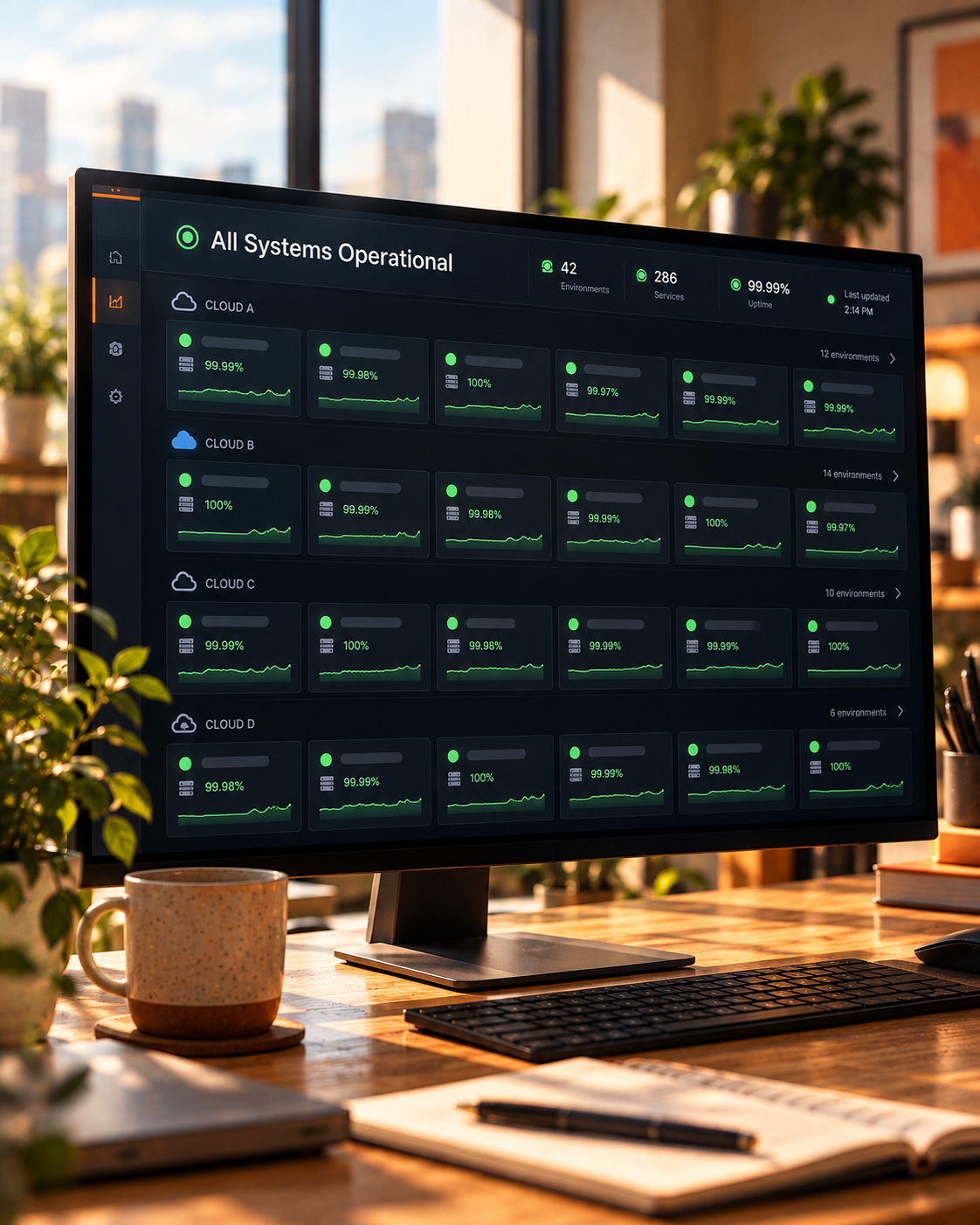
How Elite Digital handed off their multi-cloud server operations to a team their clients would never see, and never need to.

How Efficient Computer Company turned engineering infrastructure from a daily distraction into the platform their team actually builds on.

How Follosoft stopped firefighting Linux infrastructure and got back to building their field-operations platform.

How 1WorldSync handed Linux operations to Crafty Penguins, and got their focus back.
What this work looks like in practice.

A short call with an engineer. Tell us which part of the platform costs you the most time and we will tell you honestly whether we would take it.
Conversation first, scope second. No pressure.